Xplore TEM
Brand: Oxford Instruments | Category: Nanotechnology
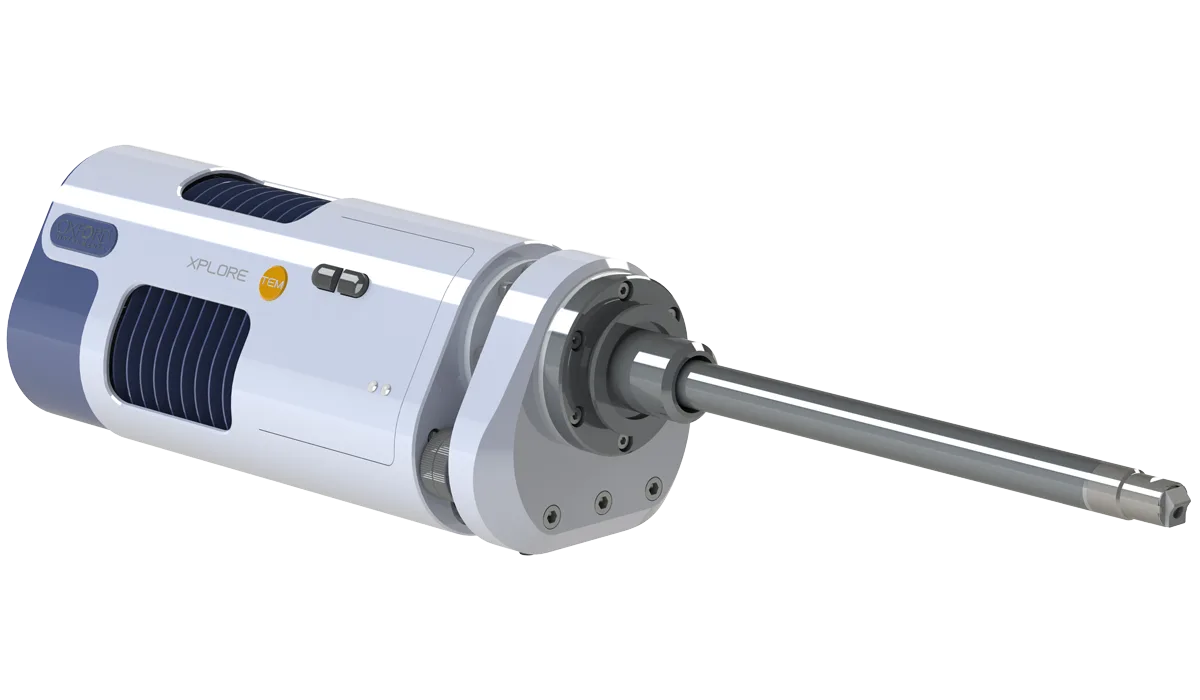
Xplore TEM is the Oxford Instruments silicon drift detector aimed at routine work on 120kV and 200kV transmission electron microscopes. It combines an 80 mm2 sensor with a polymer thin window and Extreme electronics for fast, accurate elemental characterisation. The SATW window keeps the detector straightforward to use, and element coverage runs from beryllium to californium.
Selected manufacturer specifications
| Parameter | Value |
|---|---|
| Sensor active area | 80 mm² |
| Published solid-angle range | 0.1–0.4 sr; microscope geometry dependent |
| Detector window | Polymer thin window |
Selected manufacturer data for the named configuration. Optical, detector and sample-environment options are ordered separately unless included in the quotation. Measurement results depend on the sample, selected components and operating conditions. Checked 2026-09-29.
Confirm your configuration
Share the details you know so we can prepare a comparable, itemised offer.
- Specimen or clinical application and required imaging/measurement outputs
- Optics/source, detectors, working distance, stage and documentation options
- Room conditions, utilities, preparation accessories and operator training
Get a Quote
Request an itemised quotation covering the proposed configuration, availability, lead time and agreed supply and support scope.
Useful details to share
- Materials, sample dimensions and process or measurement goal
- Required performance and existing instrument interfaces
Share what you know. You can start with your name and a phone number or email; final specifications can follow.
Not sure which configuration you need? Help me choose
Contact Vvon Technologies Limited about Oxford Instruments equipment requirements in Bangladesh.
Phone: +8801805987890 | Email: info@vvon.com.bd
More from Electron Microscopy & Microanalysis
- TM Series Energy Dispersive X-ray Spectrometer: Element series
The Element series are EDX systems for Hitachi's TM series tabletop microscopes, produced by EDAX Instruments. A Si3N4 detector window optimises low energy X-ray transmission for light element analysis, which Hitachi say improves mapping speed and detection limits over a conventional detector window, and a hexagonal support grid raises transmission further. APEX software supplies multi user logins, user configurable windows, customisable reporting, simplified automation, fast mapping, simultaneous collection and review, and spectrum match libraries. The sample configuration shown is in combination with a TM4000 series instrument.
- Ultim Max TEM
Ultim Max TEM is the Oxford Instruments silicon drift detector for nanoscale analysis and elemental mapping in the TEM. A low profile 80 mm2 sensor sits closer to the specimen and so collects more X-ray counts under any condition, and combined with windowless construction and Extreme electronics it delivers high performance EDS for 200kV instruments. An increased solid angle and take off angle reduce shadowing by bulky in situ holders, which supports mapping of samples in gas or liquid cells.
- TM Series Energy Dispersive X-ray Spectrometer: Quantax75
Quantax75 is one of the EDS systems Hitachi offer with the TM4000 series tabletop microscopes, using a built-in detector made by Bruker Nano GmbH. Hitachi note that every detector in this range is of compact design and needs no liquid nitrogen. The system gives local spectra observation at specified points, high speed colourised X-ray mapping, a hypermap function that returns spot analysis, line analysis and mapping results from a single acquisition, and live deconvolution so that overlapping peaks are separated and mapped in real time.