RLD10 laser encoder detector heads
Brand: Renishaw | Category: Nanotechnology
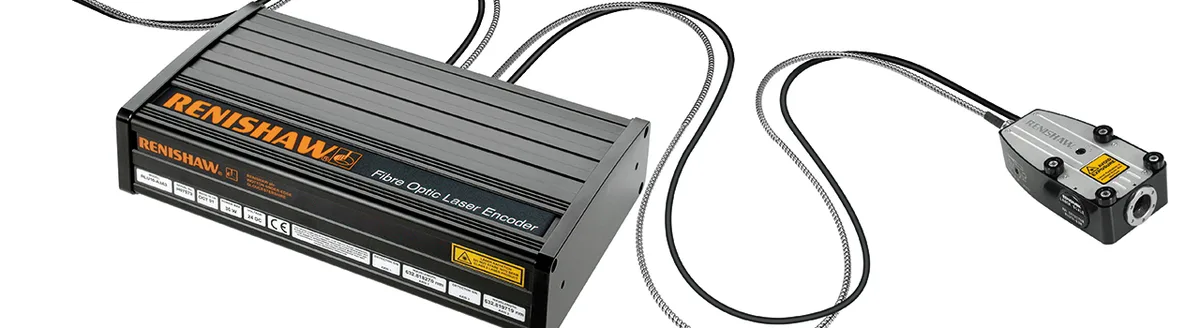
Every RLE laser interferometer encoder system is built from an RLU laser unit together with one or two RLD10 detector heads, chosen to suit the application. The detector head is the core of the optical measuring system and holds the interferometer optics, a unique multichannel fringe detection system and beam steering mechanisms. Renishaw offers three interferometer configurations, RLD10 plane mirror, RLD10 retroreflector and RLD10 differential, plus an RLD10 with no internal interferometer. Beam output orientation is chosen for each axis, except on the differential interferometer head.
Renishaw has introduced newer laser-encoder components and revised its document links. Confirm the exact installed model, compatible head/interface, current availability and model-specific datasheet. New-generation RLU100/200/300 or detector-head ratings are not substituted for this older named item. Checked 2026-09-29.
Confirm your configuration
Share the details you know so we can prepare a comparable, itemised offer.
- Material/sample geometry and required measurement range or uncertainty
- Compatible sensors, fixtures, controller and environmental conditions
- Reference materials, calibration, software and installation scope
Get a Quote
Request an itemised quotation covering the proposed configuration, availability, lead time and agreed supply and support scope.
Useful details to share
- Materials, sample dimensions and process or measurement goal
- Required performance and existing instrument interfaces
Share what you know. You can start with your name and a phone number or email; final specifications can follow.
Not sure which configuration you need? Help me choose
Contact Vvon Technologies Limited about Renishaw equipment requirements in Bangladesh.
Phone: +8801805987890 | Email: info@vvon.com.bd
More from Metrology & Position Measurement
- RLI20-P laser encoder interface for Panasonic
The RLI20-P links a Renishaw laser encoder system to a Panasonic MINAS A5 series controller. It takes the 1 Vpp analogue quadrature signals from the laser encoder and passes them through a high speed interpolator before outputting an incremental position reading in RS485 format. The internal position update rate is 100 MHz and the sub divisional error contribution is quoted as ±0.5 nm.
- RMAP multi-axis periscope
A periscope that lets three RLD10-X3-DI differential interferometer heads measure linear position, pitch and yaw along one axis of a high performance XY stage. The small beam footprint keeps the target mirrors light, and it bolts to a vacuum chamber or metrology frame.
- RLU compact laser unit with fibre optic delivery (RLU10 / RLU20)
Renishaw's RLU laser units bring the performance of a displacement interferometer together with the installation ease normally associated with tape and glass scale encoders. Supplied in single or dual axis form, an RLU contains a class 2 helium neon (HeNe) laser source, stabilisation electronics, a fibre optic launch and axis position feedback electronics, and it is combined with one or two RLD detector heads to make up an RLE system. The RLU10 holds laser frequency stability within ±50 ppb over any one hour period, which suits the majority of in air applications, while the RLU20 holds ±2 ppb over the same period for the majority of vacuum applications. Both units support velocities up to 2 m/s and a vacuum wavelength stability of ±0.1 ppm over three years.